


Zusammenfassung
Effective blended learning strategies combine multiple development methods to give leaders the right learning experience at the right time. Rather than simply offering a mix of in-person, virtual, and self-paced learning, the strongest strategies intentionally connect these experiences so they build on and reinforce one another. By combining assessment, facilitated learning, coaching, peer learning, practice, and digital tools, organizations can create more flexible, personalized development that helps leaders apply new skills on the job.
It seems like the top barrier to a successful leadership development program has shifted over time. In der Vergangenheit haben Kunden, mit denen ich zusammengearbeitet habe, von Hindernissen wie fehlenden Schulungsräumen, unzureichenden Schulungsbudgets oder fehlender Unterstützung durch die Geschäftsleitung berichtet. Now, the main barriers have coalesced around one primary challenge: How do we capture leaders’ time and attention amid the increasingly demanding roles they occupy?
That's where blended learning strategies can help. By intentionally combining different development experiences, organizations can give leaders greater flexibility while still providing the practice, interaction, and reinforcement they need to build new leadership skills.
What Is Blended Learning for Leadership Development?
Blended learning in leadership development involves intentionally combining different learning methods and experiences to help leaders build and apply new skills. That might include instructor-led learning, virtual classroom experiences, self-paced courses, microlearning, assessments, coaching, peer learning, immersive scenarios, and opportunities to practice on the job.
Some experiences happen independently, while others bring leaders together to learn, discuss challenges, practice skills, and learn from one another. At its best, blended learning leverages the strengths and efficiencies of each modality while acknowledging their limitations.
The goal isn't simply to offer leaders more ways to learn. An effective blended learning strategy connects those experiences so each one serves a purpose and reinforces what comes before and after it.
What Are the Tools for Blended Learning?
There's no single formula for the right blend. Each learning method offers different strengths, and each has limitations when used on its own. The key is choosing methods based on what leaders need to learn, practice, and apply. Five common tools can help organizations build the right blend:

1. Präsenzschulung
The in-person classroom provides formal opportunities for leaders to receive live, face-to-face instruction. Es bringt Lernende in einem Raum zusammen, der speziell für das Lernen konzipiert wurde. They benefit not only from the instruction but also from the networking and community-building that come with meeting in person. It also creates valuable opportunities for discussion, feedback, and live skill practice.
But in-person training can be one of the least flexible development methods. Diese Form des Lernens erfordert oft den größten Zeitaufwand sowohl von den Lernenden als auch von den Moderatoren. In vielen Fällen fließen Reisezeit und -kosten in die Gesamtinvestition ein. Organizations also need to consider how they will reach leaders who aren't located near a training site.

2. Virtuelles Klassenzimmer
A virtual classroom is live, instructor-led leadership development delivered through a remote meeting platform like Zoom. It has some of the same benefits as an in-person classroom. Breakout-Diskussionen und Interaktivität sind nach wie vor wichtige Funktionen, aber die Lernenden befinden sich in der Privatsphäre und dem Komfort ihres eigenen Zuhauses oder Arbeitsplatzes.
Virtual classroom learning can offer many benefits of an in-person experience, with greater flexibility and reach. But simply moving classroom content online isn't enough. Gut durchgeführte Schulungen im virtuellen Klassenzimmer können mit dem richtigen Design und der richtigen Moderation genauso ansprechend sein wie persönliche Schulungen.
Another challenge with virtual classroom training is keeping leaders engaged for longer periods online. This is where blended learning can help the virtual classroom shine. If you can teach foundational concepts in a short, self-paced pre-work course, you can reserve live learning time primarily for group interaction, discussion, and practice.
3. Flipped Classroom
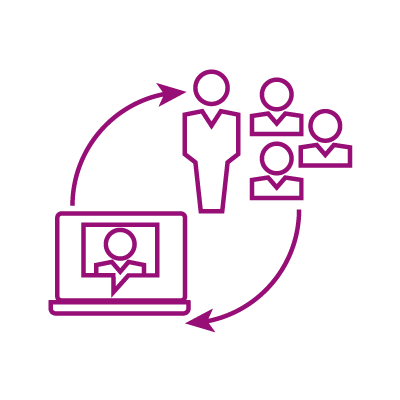
This blended learning format, which may involve in-person or virtual instructor-led training, relies on learners engaging with content on their own ahead of a group session. Während der Live-Veranstaltung können die Lernenden dann sofort damit beginnen, mit den Inhalten auf eine praktischere Weise zu interagieren, anstatt Zeit mit den eher konzeptionellen Teilen des Lernens zu verbringen. Tiefgründige Diskussionen, Aktivitäten und das Üben von Fähigkeiten sind nur einige Beispiele.
The flipped classroom maximizes time spent on the kinds of learning that can only happen when learners are together. But it does come with a limitation: flipped learning requires a high level of accountability. For best results, learners must engage with the assigned content before class. Wenn die Lernenden die Vorarbeit überspringen, muss der Moderator in das interaktive Lernen einsteigen, um sie auf den neuesten Stand zu bringen.
That makes reinforcement and accountability an important part of the flipped classroom strategy—and of blended learning in general—rather than leaving each learning experience to stand on its own.

4. Online-Kurse
Self-paced online courses are among the most flexible tools in the learning professional's toolkit. Anyone can use them, anywhere, at any time. Online learning can also support greater personalization by giving leaders access to development that aligns with their individual needs and moments of need.
But flexibility alone doesn’t guarantee impact. Self-paced courses typically offer fewer opportunities for peer discussion, feedback, and live practice. That’s why they're more powerful when connected to other development experiences than when offered as a standalone content library.
Auf den Unterschied kommt es an. Only 37% of organizations report strong ROI from standalone learning libraries, compared with 54% for objective diagnostic assessments, 53% for executive coaching, and 51% for 360-degree feedback.
The takeaway isn't to abandon self-paced learning. It's to connect it with the insight, interaction, and practice that help leaders apply what they learn.

5. Mikrolernen
Microlearning is a subset of online learning in which the content is much shorter. Whereas online courses may take longer to complete, learners can typically complete microlearning in just a few minutes.
While longer forms of learning, like coaching, explore a broad concept, microlearning narrows in on a more specific topic, such as a model for giving feedback for improvement. Aufgrund der kurzen Dauer wird Microlearning häufig für Just-in-Time-Lernen eingesetzt. Microlearning wird auch häufig eingesetzt, um das im formalen Lernen erworbene Wissen zu festigen oder zu vertiefen.
Like other self-paced methods, microlearning is most effective when it has a clear role in the broader development experience. For example, a short activity can reinforce a skill after facilitated learning or help a leader prepare for an upcoming conversation.
What Are Blended Learning Strategies?
The right blended learning strategy will look different for every organization, but it works best when different forms of learning are intentionally connected through a learning journey. Each experience can then support, build on, and reinforce the others rather than standing alone.
In-person classroom and virtual classroom experiences often serve as effective ways to kick off a learning journey. Why? Face-to-face collaboration can build a sense of purpose for the journey and cohesiveness among learners.
Then, after learners are committed to and engaged in the blended learning program, organizations might introduce flipped learning. Online courses and microcourses can also serve as effective intersession activities. When participants know they will be called upon to discuss or apply what they learned in the next live session, self-paced learning connects to a larger purpose rather than becoming another item to complete.
In one client example, DDI helped create a blended learning journey for frontline leaders. Leaders began with a personalized assessment experience, which helped identify development needs and guide both digital learning and live group sessions. The result was a more connected experience that combined personalized development with opportunities to build skills together and apply them back on the job.
The sequence will look different for every organization. What matters is that each experience has a clear role in helping leaders build, practice, reinforce, or apply a skill.
How to Build Effective Blended Learning Strategies for Leadership Development
A strong blended learning strategy starts with the outcomes leaders and the business need, then determines which development methods can best support them. Use these strategies to create the right blend:
1. Start with Your Leaders’ Needs
Unterschiedliche Führungsebenen haben unterschiedliche Erwartungen und Lernbedürfnisse. Rather than assuming one blend will work equally well for everyone, consider leaders' roles, experience levels, development needs, and the situations where they will need to apply new skills.
Assessment can help make those decisions more objective. Diagnostic assessments can identify strengths and gaps before development begins, giving organizations a clearer basis for deciding what leaders need rather than relying on a one-size-fits-all curriculum.
2. Connect Learning to Business Priorities
Blended learning is most valuable when it helps leaders solve real challenges, not when it simply gives them more content to consume. Start by identifying the business priorities your leaders need to support and the behaviors they will need to demonstrate to deliver on them. Dabei kann es sich um eine Unternehmensinitiative, einen Change-Management-Prozess oder eine neue Geschäftsstrategie handeln.
Connecting development to these priorities makes learning more relevant and gives leaders opportunities to apply new skills directly to their work.
Wie machen Experten für Führungskräfteentwicklung das? Sie gestalten ihre Blended-Learning-Strategie um etwas, das für alle Führungskräfte sichtbar ist.
3. Personalize the Blend
One advantage of blended learning is that it makes it easier to create a more personalized learning experience by leveraging high-quality leadership assessments. Assessment insights help leaders focus on the areas where development will have the greatest impact, rather than sending everyone through the same experience.
That more targeted approach is also linked to stronger outcomes. Companies that pair assessments with coaching are 1.8X more likely to be among the top 10% of financial performers than those that don’t.
Many organizations make the mistake of making large libraries of self-paced content available without providing enough guidance on what leaders should use and when. But we can't expect learners in a busy, chaotic world to sort through massive libraries of online content to find what they need. Instead, use assessment insights and curated learning paths to guide leaders toward development that fits their needs while still giving them flexibility and choice.
Die Vorteile von Blended-Learning-Strategien
Blended Learning ist eines der mächtigsten Werkzeuge im Werkzeugkasten moderner Lern- und Entwicklungsprofis. The key is to avoid thinking of it as a mere tactic to shorten training sessions, or as an event-based approach at all.
Rather, effective blended learning creates a development experience in which leaders can access the right kind of learning at the right time. Das könnte so aussehen, dass man an einem Tag einen Mikrokurs belegt, um sich auf ein schwieriges Gespräch vorzubereiten. On a different day, it might look like spending more focused time in instructor-led training for deeper learning, skill practice, and peer networking.
The strongest blended learning strategies make development part of how leaders work. They combine flexibility with structure, personalization with shared experiences, and learning with opportunities to practice and apply new skills.
And ultimately, success isn’t about how many modalities an organization offers. It’s about whether those experiences work together to change what leaders do. Seventy-eight percent of HR leaders say visible behavior change is the most valued metric of development success.
When blended learning is intentionally designed around that goal, every element has a purpose: helping leaders build skills they can apply when it matters most.
Haben Sie eine Frage?
Häufig gestellte Fragen zu Blended-Learning-Strategien
-
Was sind Blended-Learning-Strategien?

Blended learning strategies intentionally combine different development methods, such as instructor-led learning, virtual classroom experiences, self-paced courses, microlearning, assessments, coaching, peer learning, and practice. The goal is to use each method where it adds the most value and connect the experiences so they reinforce one another.
-
Warum sind Blended-Learning-Strategien für Führungskräfte effektiv?
Blended Learning hilft Unternehmen, die begrenzte Zeit und Aufmerksamkeit von Führungskräften zu nutzen, indem es Flexibilität bietet, ohne die Wirkung zu beeinträchtigen. Wenn es als Lernreise konzipiert ist, stärkt es die Fähigkeiten im Laufe der Zeit und unterstützt eine nachhaltige Verhaltensänderung.
-
What is an example of a blended learning strategy?
A blended learning strategy might begin with an assessment to identify development needs, followed by self-paced learning to introduce key concepts. Leaders could then attend a facilitated session to discuss and practice skills, apply those skills on the job, and receive coaching and reinforcement afterward.
-
Why is blended learning effective for leadership development?
Blended learning gives organizations the flexibility to use different development methods for different purposes. Leaders can gain knowledge independently, practice skills with others, receive feedback and coaching, and access reinforcement when they need it. Connecting these experiences can help move leaders from learning a skill to applying it on the job.
-
What should a blended learning strategy include?
An effective blended learning strategy can include assessments, instructor-led and virtual learning, self-paced courses, microlearning, coaching, peer learning, immersive practice, and on-the-job application. The right mix depends on leaders' needs, business priorities, and the behaviors the organization wants to develop.